Family Canadian Citizenship – Bill C-3 Eligibility
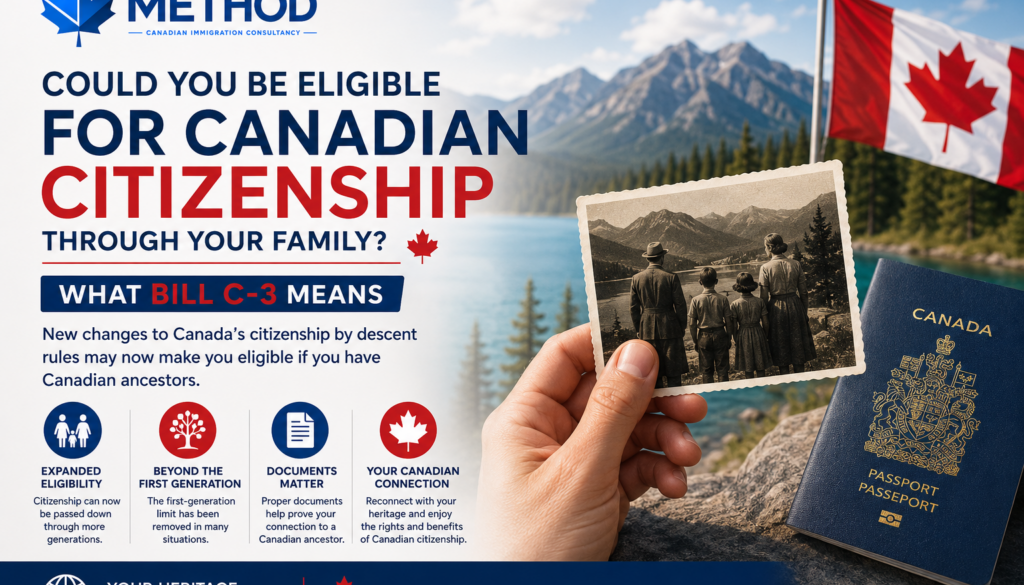
Could You Be Eligible for Canadian Citizenship Through Your Family? What Bill C-3 Means
Thousands of people with Canadian family roots may now have a new opportunity to claim Canadian citizenship thanks to changes introduced under Bill C-3.
The legislation updates Canada’s citizenship by descent rules, expanding eligibility for many individuals who were previously excluded under the first-generation limit. For those with Canadian parents, grandparents, or other Canadian ancestors, it’s an important change that could open the door to Canadian citizenship.
What Is Bill C-3?
Bill C-3 amends the Citizenship Act by changing how Canadian citizenship can be passed to children born outside Canada.
Previously, citizenship by descent was generally limited to the first generation born abroad. This meant that if a Canadian citizen was also born outside Canada, they often could not automatically pass their citizenship to their children born outside Canada.
The new legislation removes this restriction in many situations, allowing more people with Canadian ancestry to qualify for citizenship.
Who Could Benefit?
You may be eligible for Canadian citizenship if you:
- Were born outside Canada;
- Have a Canadian parent or ancestor who was a Canadian citizen; and
- Meet the eligibility requirements under the updated Citizenship Act.
Each family history is unique, so eligibility depends on several factors, including dates of birth, how citizenship was acquired, and family relationships.
A New Requirement for Future Generations
While Bill C-3 expands citizenship by descent for many people, it also introduces a new rule for future generations.
For certain children born outside Canada after the legislation came into force, a Canadian parent who was also born abroad must demonstrate a substantial connection to Canada before passing citizenship to their child.
This generally requires the parent to have accumulated at least 1,095 days (three years) of physical presence in Canada before the child’s birth or adoption.
The purpose of this requirement is to ensure that future generations maintaining Canadian citizenship also have meaningful ties to the country.
Supporting Documents
Applicants claiming citizenship by descent should be prepared to provide documents that establish their family relationship to a Canadian citizen.
These may include:
- Birth certificates
- Marriage certificates or legal name change documents
- Adoption records, where applicable
- Proof of the ancestor’s Canadian citizenship
Providing complete and accurate documentation can help avoid unnecessary processing delays.
Why These Changes Matter
Bill C-3 represents one of the most significant updates to Canada’s citizenship by descent rules in years. Many people who previously believed they were not eligible may now qualify under the revised legislation.
For families with Canadian heritage, the changes may provide an opportunity to obtain Canadian citizenship, access a Canadian passport, and enjoy the rights and benefits that come with being a Canadian citizen.
Final Thoughts
If you have Canadian ancestry, now is a good time to review your family’s history and determine whether the updated rules apply to you. Because citizenship by descent cases often involve multiple generations and historical records, every situation is different.
Understanding the new provisions under Bill C-3 can help you determine whether you or your family members may now have a pathway to Canadian citizenship that was not previously available.