Method Immigration
  • About
  • Services
    • Provincial Nominee Program (PNP)
    • Family Sponsorship
    • Study Permits
    • Express Entry
    • Temporary Work Permit
    • LMIA
    • Parent/Grandparent Supervisa
    • Caregiver Visas
  • News
  • Pricing
  • Contact
  • Book Now
Method Immigration
August 19 2025

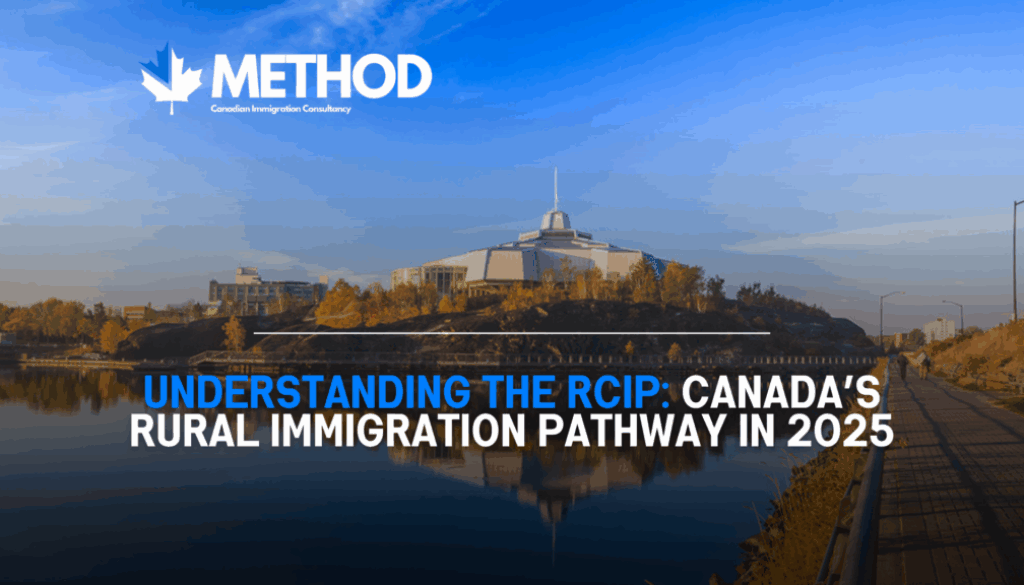
Discover the Rural Community Immigration Pilot (RCIP): Your Pathway to Permanent Residency in Canada’s Thriving Rural Communities

MethodImmigration PR, Rural Community #ImmigrationCanada, #IRCC, #PR


🌾 Canada’s rural heartlands are calling! The Rural Community Immigration Pilot (RCIP) is making waves in 2025, offering skilled workers and their families a unique opportunity to build a new life in Canada’s vibrant smaller communities. With unprecedented demand this year, the RCIP is addressing labor shortages in rural areas while paving a clear path to permanent residency for newcomers. If you’re dreaming of a welcoming community, meaningful work, and a chance to call Canada home, the RCIP could be your perfect fit. Read on to learn why this program is a game-changer for immigrants in 2025!

What is the RCIP?
The Rural Community Immigration Pilot is a Canadian immigration initiative designed to attract skilled workers to rural and smaller communities across the country. These areas, often overlooked in favor of big cities like Toronto or Vancouver, face significant labor shortages in industries like healthcare, agriculture, trades, and technology. The RCIP connects talented newcomers with employers in these regions, offering not just jobs but also a pathway to permanent residency. Launched as part of Canada’s broader strategy to balance population growth and economic development, the RCIP is gaining traction as a cornerstone of immigration policy in 2025.

Why Choose Rural Canada?
Canada’s rural communities are more than just picturesque landscapes—they’re vibrant hubs of opportunity. From the rolling prairies of Manitoba to the coastal towns of Nova Scotia, these areas offer affordable living, tight-knit communities, and a high quality of life. Imagine raising your family in a safe, welcoming environment with access to excellent schools, outdoor recreation, and a slower pace of life, all while contributing to a growing local economy. The RCIP makes this vision a reality by matching your skills with in-demand roles, ensuring you can thrive both personally and professionally.

In 2025, the RCIP is seeing a surge in interest as more immigrants discover the benefits of rural life. Unlike urban centers facing housing shortages, rural areas often provide more affordable homes and lower costs of living. Plus, with Canada’s commitment to supporting newcomers, programs like the Canada Child Benefit (CCB) help families settle in with financial ease, covering expenses like back-to-school supplies.

How Does the RCIP Work?
The RCIP operates as a community-driven program, meaning local employers and communities play a key role in selecting candidates. Here’s a quick overview:
– Eligibility: Candidates typically need a job offer from a designated employer in a participating rural community, along with relevant work experience, language proficiency (English or French), and educational credentials.
– Application Process: After securing a job offer, applicants apply through the RCIP stream, which is tailored to fast-track permanent residency for those committed to settling in rural areas.
– Path to PR: Successful applicants can transition to permanent residency, allowing them to live and work anywhere in Canada while building roots in their new community.

The program’s flexibility makes it appealing for a wide range of professionals, from nurses and carpenters to IT specialists and agricultural workers. In 2025, IRCC has emphasized streamlining the process to ensure quicker approvals, making the RCIP a standout option for those eager to start their Canadian journey.

Why Now?
The RCIP is gaining momentum in 2025 due to increased demand for workers in rural Canada. As urban centers grapple with housing and economic pressures, rural communities are stepping up as engines of growth. The Canadian government is actively promoting the RCIP to balance immigration across the country, ensuring that smaller towns and regions thrive alongside major cities. This focus aligns with the ongoing public consultations for the 2026–2028 Immigration Levels Plan, where stakeholders can advocate for more rural immigration pathways (share your voice by August 17, 2025, at [Canada.ca](https://www.canada.ca/en/immigration-refugees-citizenship/corporate/mandate/immigration-levels-plan-consultations.html)).

Take the Next Step
The RCIP is more than an immigration program—it’s a chance to build a future in a community that values your skills and welcomes your family. Whether you’re a skilled tradesperson, a healthcare professional, or an entrepreneur, rural Canada has a place for you. Ready to explore the RCIP? Visit www.method-immigration.com for expert guides, application tips, and personalized advice on navigating this exciting pathway to permanent residency.

Don’t miss out on this booming opportunity! Contact our team today to learn how the RCIP can help you achieve your Canadian dream in 2025. 🌄

#RuralCanada #RCIP #ImmigrationOpportunities #Canada2025
Medical Examination Requirements for Permanent Residence Applicants in Canada Canada Resumes Education-Focused Express Entry Draws: Lower CRS Threshold Signals Broader Opportunities for Skilled Immigrants

Related Posts

Method Immigration

Business, Caregiver, Express Entry, IEC (International Experience Canada), LMIA, Parent & Grandparent (PGP), Post Graduate Work Permit, PR, Provincial Nominee Program (PNP), Rural Community, Skilled Worker, Sponsorship, Study Permit, Uncategorized

Application Review with Method Immigration

Method Immigration

Express Entry, PR

IRCC Launches October with Targeted Express Entry Draw: 1,000 CEC Invitations Issued

Popular Posts

  • Passport Fees Set to Rise
  • UK Travel Rules Tighten for Dual Citizens
  • Express Entry Changes
  • Canada’s 2026 Immigration: Draws & Changes
  • IEC Renewal Update

Application Review

Navigating an immigration application can be challenging. We provide a comprehensive application review service designed to help individuals and families submit accurate, compliant, and complete applications.

Each application undergoes a meticulous review. This includes examining documents for accuracy and consistency, verifying compliance with regulatory requirements, and ensuring all forms are properly completed. Our detailed approach minimizes the risk of errors that could delay or jeopardize your application.

Recognizing that every immigration journey is unique, we offer one-on-one consultations to understand your individual circumstances and objectives. This personalized service allows us to tailor our review process to meet your specific needs and ensure your application reflects your situation accurately.

Click here to learn more 


Consultation (General or Intro)

Discuss your situation with us, have your credentials assessed to see which route is best for you, and see if you qualify to immigrate to Canada.

We recommend an introductory consultation for any new clients who are looking for guidance on their immigration process.  

During these consultations, we explore the options available to you based on your situation, and provide a roadmap towards further actions and assistance that we can provide. 

  • 60 minute consultation with a Regulated Canadian Immigration Consultant – $165.
  • 30 minute consultation with a Regulated Canadian Immigration Consultant – $95.

Consultations will be conducted by zoom video call.

Book a consultation

Study Permits

If you are a student that wants to come to Canada to study at a Canadian institution (school, college or university), this category may be for you.  You can study for a degree/diploma or any other accredited course on a study permit which is valid for the full length of your course.  You may also be allowed to work in some circumstances to gain extra money on the side to fund your student lifestyle in Canada.  We also process extensions to existing study permits for those of you who are already in Canada and have an expiring study permit.  We also process Post Graduate Work Permits (PGWP) that are for recent graduates who may wish to work in Canada after they have completed their studies.  If you want to see Canada while learning something new, then this category may be for you.

Express Entry

Express Entry is for skilled people that want to come to Canada and gain permanent residency.  It is an online points-based system – you get points for your education, work experience, age, and language skills.  Once you’ve added up your points, you will get placed in a pool of candidates.  The candidates with the most points will then get picked out of this pool and will be invited to apply for their permanent resident visa.  The more points you get, the more chance of you receiving an invitation to apply.

There are several categories for express entry, these include:

Canadian Experience Class (CEC) – this category is for people that have at least 1 year of Canadian work experience.
Foreign Skilled Worker (FSW) – you don’t need Canadian work experience for this category, but you do need foreign work experience.  

Foreign Skilled Trades (FST) – you don’t need Canadian work experience for this category but you do need work experience in a skilled trades role.

Provincial Nominee Program (PNP) – See PNP.

Temporary Work Permit

If you are looking to come to Canada and work on a temporary basis, this may be for you.  You may have the intention to come to Canada on a temporary basis but then look into becoming a permanent resident – then this category also may be for you.  

You may have a job offer in Canada that you want to accept or you may just want to work a ski season on the Mountains – whatever the reason is, this program may be for you.  

We process open work permits as well as employer specific work permits.  We also process extensions to existing workers for those of you who are already in Canada and have an expiring work permit.  We also deal with companies and corporations who may be looking to hire temporary foreign workers in Canada – see LMIA.

LMIA

If you are an employer who is looking to hire temporary foreign workers in Canada, then you must obtain an LMIA.  We process LMIAs and also the work permit Applications for your temporary foreign workers.  An LMIA is also used to support a skilled worker achieve their permanent residency status.  If you are a current employee and your employer is willing to support you in your permanent residency application, then this program is for you.  We can process the whole application including your permanent residency file.  The LMIA process is a long and complex one, but hiring us to assist you in this process will make it much more stress free and easy to deal with.

Parent/ Grandparent Supervisa

Parent/Grandparent Supervisas are a helpful way to be able to see your children/grandchildren without being limited to only a visitor visa (usually only granted for 12 weeks). You are able to visit your children/grandchildren up to 5 years at a time for a period of 10 years.

It is also a much quicker application than a sponsorship application and is not subject to paying a permanent residency fee. 

Book a consultation to discuss if this might fit your case, and we will provide a step by step process, as well as guidance, on applying for the supervisa. 

Caregiver Visas


If you are currently a care giver for children, elderly or other people that may need care, you can apply for a Caregiver visa. This allows carers to become permanent residents of Canada while doing the job they love. Whether you are a home child care worker or home support worker you may apply if you already have a job.

Family Sponsorship

The Family Sponsorship category is for Canadian Citizens and Permanent Residents to be able to sponsor a family member to come to Canada and gain their permanent residency.  It could be spouses, children, parents, grandparents and in some cases Brothers, Sisters, Uncles, Aunties, Cousins, Nephews & Nieces.  Similarly if you are a foreign national that has a family member in Canada who is already a permanent resident or Citizen, this category may be for you. 

This category also includes the parent/grandparent super visa, which allows parents/grandparents of a permanent resident or Canadian Citizen to come to Canada for several months throughout the year without actually having to sponsor them.  Finally, the family sponsorship category also allows you to adopt a child to Canada. 

We have completed a whole range of family sponsorship applications so please let us know your situation and we may be able to help.

Provincial Nominee Program (PNP)

Are you considering immigrating to Canada and looking to apply under the Provincial Nominee Program (PNP)? Each province and territory in Canada has its own unique PNP and the eligibility criteria and minimum requirements for each program can vary. Some of the different streams that provinces and territories may have under their PNP include entrepreneur programs, graduate streams, in-demand skills streams and French speaker programs.

When it comes to applying under the PNP, you have two options: Express Entry or paper-based application. If you choose to apply through Express Entry, you can indicate your interest in a specific province or territory and if they are interested in your profile they may send you a Notification of Interest (NOI). If you receive an NOI, you can then apply for a nomination from the province or territory.

If you are nominated by a province or territory, and you meet the eligibility criteria and minimum requirements, you will be able to apply for permanent residence through Express Entry. It’s worth noting that 80% of Express Entry PNP applications are processed within 6 months, making it a fast-track option for applicants looking to immigrate to Canada.

It’s important to research and compare the different PNP streams offered by each province and territory to determine which program is the best fit for you. Some provinces and territories have more frequent rounds of invitations than others and some programs may have a lower minimum requirement for language or experience. Also, Keep in mind that some provinces and territories may not be accepting applications at all times.

In any case, the immigration process can be complex, so it’s always a good idea to seek professional help if necessary. With the right research and guidance, you can increase your chances of success and find the perfect program to help you achieve your goal of immigrating to Canada.