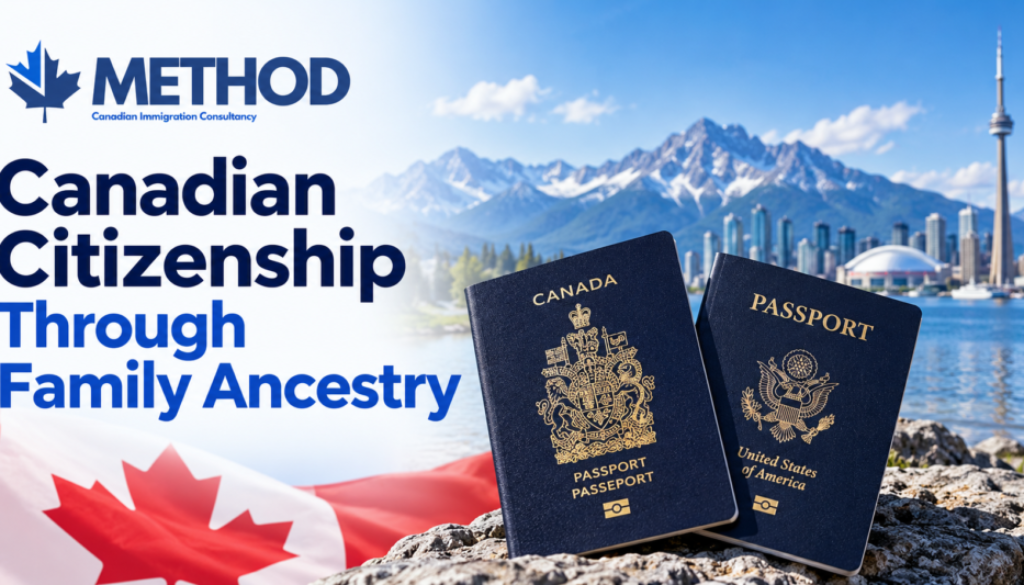
Canadian Citizenship Through Family Ancestry
Canada is introducing significant changes to its immigration system in 2026, including reforms to Express Entry. However, for Americans with Canadian parents, grandparents or even great-grandparents, there may be a more direct route to Canadian citizenship.
Changes to Canada’s Citizenship Act that took effect on December 15, 2025, have expanded eligibility for citizenship by descent, potentially allowing many individuals born outside Canada to be recognized as Canadian citizens.
For eligible Americans, this could mean obtaining Canadian citizenship without first applying for permanent residence, securing a Canadian job offer or relocating to Canada.
What Has Changed Under Canada’s Citizenship Act?
On December 15, 2025, amendments introduced through Bill C-3 came into effect, changing how Canadian citizenship can be passed down to children born outside Canada.
Previously, Canada’s first-generation limit generally prevented Canadian citizens born abroad from automatically passing citizenship to their own children who were also born outside Canada.
The legislative changes have removed this restriction for many individuals born before December 15, 2025.
As a result, some people who previously did not qualify for Canadian citizenship may now be recognized as citizens through their Canadian family ancestry.
This could include individuals with:
- A Canadian-born parent.
- A Canadian grandparent.
- A Canadian great-grandparent.
- More distant Canadian ancestry, where citizenship can be established through successive generations.
Importantly, having a Canadian ancestor does not automatically guarantee eligibility. Individual circumstances, including family history, adoption, previous citizenship losses and applicable legal provisions, must be considered.
Do Americans With Canadian Grandparents Qualify for Citizenship?
Potentially, yes.
For example, an American born in the United States whose grandparent was born in Canada may now have a claim to Canadian citizenship, even if their parent was also born outside Canada.
Depending on their circumstances, the individual may already be a Canadian citizen under the amended legislation.
Rather than applying to become a citizen through the traditional immigration process, they may be eligible to apply for a Canadian citizenship certificate, which provides official proof of an existing citizenship status.
This distinction is important because obtaining proof of citizenship is different from applying for citizenship through naturalization.
Do You Need to Live in Canada to Claim Citizenship by Descent?
For individuals who already qualify as Canadian citizens through descent, there is generally no requirement to move to Canada before applying for proof of citizenship.
Eligible applicants may be able to complete the process while continuing to live in the United States or another country.
Canadian citizens have the right to live and work in Canada without needing a work permit or permanent resident status.
Canada and the United States also generally permit dual citizenship, meaning an eligible American may be able to hold both Canadian and American citizenship.
Citizenship Applications Are Increasing
Interest in Canadian citizenship by descent has reportedly increased significantly following the legislative changes.
According to figures reported in October 2026, the number of people awaiting decisions on proof of Canadian citizenship applications had increased from approximately 70,400 in May 2026 to 130,700 in October.
Estimated processing times have also risen to approximately 34 months for new applications.
These processing times are estimates and may change as Immigration, Refugees and Citizenship Canada (IRCC) responds to increased application volumes.
Individuals considering an application should review current processing times and ensure they have the documentation needed to establish their citizenship claim.
What Documents May Be Required?
Individuals applying for proof of Canadian citizenship through ancestry will generally need documentation establishing their family relationship to the relevant Canadian ancestor.
Depending on the circumstances, this may include:
- Birth certificates showing the relationship between generations.
- Canadian birth certificates or citizenship records.
- Marriage certificates or legal name-change documents.
- Adoption records, where applicable.
- Identity documents and other supporting evidence.
For families with multiple generations born outside Canada, gathering historical documents may require additional research.
How Are the New Express Entry Changes Different?
Canada is also introducing changes to its Express Entry system, with reforms scheduled to take effect on November 3, 2026.
The announced changes include a greater emphasis on high-wage Canadian employment and work experience when assessing certain candidates for permanent residence.
Express Entry is designed to manage immigration applications from eligible skilled workers who wish to become permanent residents.
Citizenship by descent, however, operates under a separate legal framework.
Individuals who are already Canadian citizens through descent do not need to qualify for Express Entry to establish their citizenship.
For Americans with qualifying Canadian ancestry, this distinction could be particularly important as Canada’s economic immigration selection system continues to evolve.
What About Children Born After December 15, 2025?
The updated citizenship legislation also includes specific requirements for certain children born outside Canada on or after December 15, 2025.
Where a Canadian parent was also born or adopted outside Canada, the parent may need to demonstrate a substantial connection to Canada.
This generally involves showing at least 1,095 days of physical presence in Canada before the child’s birth or adoption, subject to the applicable legislative requirements.
Families should therefore avoid assuming that the same eligibility rules apply to every generation or every date of birth.
Why Is Canadian Citizenship by Descent Important?
For eligible individuals, Canadian citizenship can provide several significant benefits.
These include the ability to live, work and study in Canada without immigration permits, access to a Canadian passport subject to passport requirements, and the opportunity to establish a future life in Canada.
For some families, citizenship recognition may also help clarify the citizenship status of children and future generations.
However, eligibility for healthcare, education benefits and other services can depend on residency and additional provincial or federal requirements.
How Method Immigration Can Help
If you were born outside Canada and have Canadian parents, grandparents or more distant Canadian ancestry, you may have a citizenship claim worth exploring.
At Method Immigration, we understand that Canadian citizenship and immigration rules can be complex, particularly when multiple generations and historical records are involved.
Our regulated Canadian immigration consultant can help you understand the relevant requirements, assess potential immigration and citizenship pathways, and determine appropriate next steps for your circumstances.
Do you have Canadian ancestry and want to explore your options?
Contact Method Immigration to arrange a consultation and learn more about your potential eligibility.
Website: https://method-immigration.com
Disclaimer: This article provides general information and does not constitute individualized immigration or legal advice. Eligibility and application requirements depend on individual circumstances and the legislation in effect.
Recommended SEO settings
| Field | Suggested content |
|---|---|
| SEO title | Canadian Citizenship by Descent: New Rules for Americans in 2026 |
| URL slug | canadian-citizenship-by-descent-americans-2026 |
| Focus keyword | Canadian citizenship by descent |
| Secondary keywords | Bill C-3, Canadian ancestry, dual citizenship, Canadian grandparents |
| Category | Canadian Citizenship |
| Meta description | Have Canadian parents or grandparents? Discover how Canada’s 2025 citizenship law changes could make you eligible for Canadian citizenship in 2026. |
Source verification: IRCC confirms that Bill C-3 took effect on December 15, 2025, and that different rules apply to children born before and after that date.
Canada
IRCC also confirms the announced November 3 Express Entry reforms.
Canada
+1
The article is suitable for publication after Method Immigration reviews the legal details and confirms the current processing-time estimate.