Medical Examination Requirements for Permanent Residence Applicants in Canada
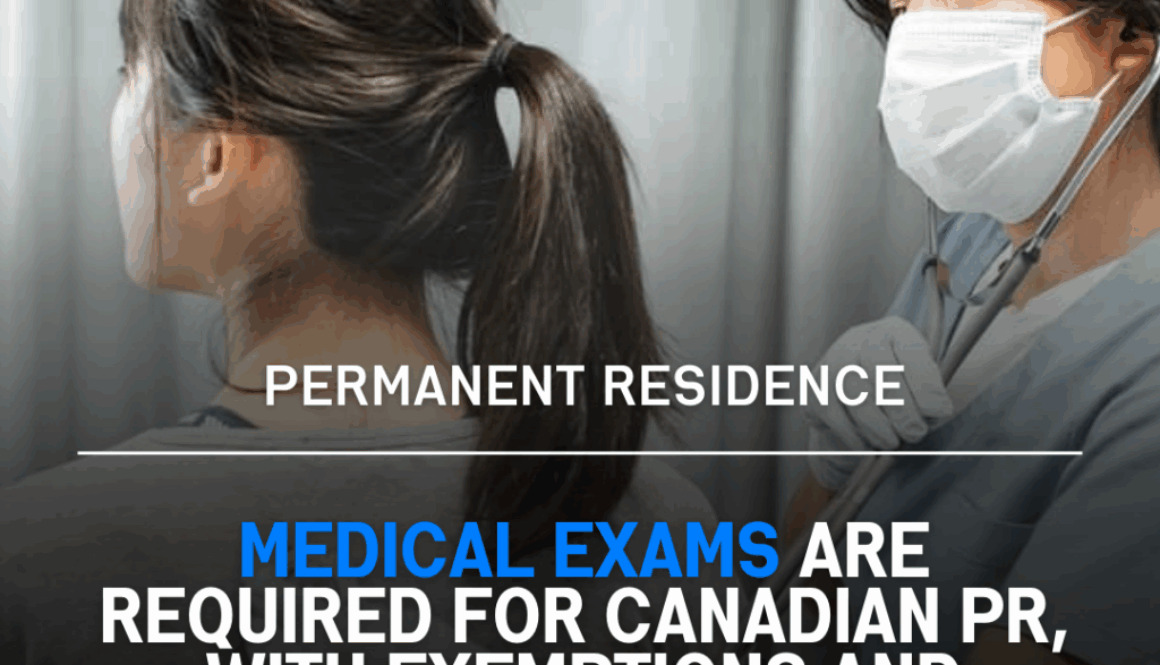
If you’re applying for permanent residence in Canada, understanding the medical examination requirements is crucial. Here’s a concise guide based on the latest information from the Government of Canada.
In-Canada Applicants
The temporary public policy for immigration medical exams (IMEs) has been extended until October 5, 2029. If you’ve completed an IME within the last 5 years, include your IME number (or unique medical identifier) in your application. You may be exempt from a new IME if:
- You’re applying for permanent or temporary residence.
- You live in Canada.
- Your previous IME (within 5 years) showed low or no risk to public health/safety.
Note: All permanent residence applicants, including family members (even if not accompanying), must undergo an IME.
Types of Medical Exams
There are two types of IMEs:
- Standard Medical Exam: Comprehensive health assessment.
- Streamlined Medical Exam: Simplified exam used in urgent situations (e.g., humanitarian crises), as determined by Immigration, Refugees and Citizenship Canada (IRCC). You cannot choose the exam type; IRCC will specify.
Who Can Perform the Exam
Only panel physicians listed by IRCC can conduct IMEs. Your personal doctor is not eligible. IRCC makes the final decision on your exam results. If issues arise, you’ll be contacted in writing.
Find a panel physician.
When to Get Your Medical Exam
- Express Entry Applicants: As of August 21, 2025, you must complete an upfront medical exam before submitting your application. Contact a panel physician directly.
- Other Applications: Wait for IRCC instructions after submitting your application. You must complete the exam within 30 days of receiving instructions. This applies to sponsored spouses, partners, or children.
- Refugee Claimants at Port of Entry: A border services officer will instruct you to get an exam within 30 days.
Failure to follow instructions may result in application refusal.
What to Bring to Your Appointment
- Identification: Preferably a passport, but other accepted IDs include a national ID card, driver’s license (from Australia, Canada, New Zealand, UK, or US), birth certificate (for minors), or specific travel/refugee documents.
- Glasses or contact lenses, if applicable.
- Medical reports or test results for existing conditions.
- List of current medications.
- Medical Report form (IMM 1017E or IMM 1020E), provided by IRCC for non-upfront exams.
- 4 recent photographs, if the physician doesn’t use eMedical (confirm with the physician).
Vaccination Records: Bring proof of vaccinations (e.g., diphtheria, tetanus, COVID-19). The panel physician may record and share this with IRCC if you consent. Vaccination is voluntary and not required.
Costs
You’re responsible for all exam-related fees, including:
- Doctor or radiologist fees.
- Special tests or treatments.
- Specialist visits, if required.
- Optional vaccines (depending on the physician’s fees).
Refugees and asylum seekers may be exempt from certain fees. If your application is refused, fees are non-refundable.
If You Can’t Complete the Exam
If you face exceptional circumstances or lack access to a panel physician, submit a letter of explanation to IRCC for review. Contact IRCC for guidance.
What to Expect During the Exam
Standard Medical Exam
- Identification: The clinic will verify your identity and take your photo.
- Medical History: The physician will complete a questionnaire about your health and medications.
- Physical Exam: Includes weight, height, vision, hearing, heart, lungs, abdomen, limbs, and skin checks. Genital or rectal exams are not required. Breast exams, if needed, will be explained.
- Other Tests: Depending on age, you may need chest X-rays or lab tests. Abnormal results may lead to specialist referrals.
- Vaccinations: Optional vaccines may be offered. Bring proof of prior vaccinations if available.
Streamlined Medical Exam
- Similar to the standard exam but simplified, with a focus on medical history and select tests (e.g., X-rays or lab tests, based on age).
- Follow the same identification and chaperone protocols.
Chaperone Rights: You can request a staff member to be present, stop the exam to ask questions, or request a chaperone at any time.
After the Exam
- The physician sends results to IRCC and provides you with a document confirming the exam. Keep this for your records.
- If dissatisfied with the physician or radiologist, submit feedback via IRCC’s feedback form.
- Request a copy of your results from the physician during the visit (reports and X-rays are IRCC property and won’t be returned).
Including Results with Your Application
- Upfront Medical Exam: Follow IRCC instructions to include results.
- Streamlined or Post-Application Exam: No action needed; results are sent directly to IRCC.
Validity of Results
Medical exam results are valid for 12 months. If you don’t become a permanent resident within this period, you may need another exam.
For more details, visit the Government of Canada’s official page.
Page last modified: August 15, 2025