MethodImmigration
Posts by :
Discover the Rural Community Immigration Pilot (RCIP): Your Pathway to Permanent Residency in Canada’s Thriving Rural Communities
🌾 Canada’s rural heartlands are calling! The Rural Community Immigration Pilot (RCIP) is making waves in 2025, offering skilled workers and their families a unique opportunity to build a new life in Canada’s vibrant smaller communities. With unprecedented demand this year, the RCIP is addressing labor shortages in rural areas while paving a clear path to permanent residency for newcomers. If you’re dreaming of a welcoming community, meaningful work, and a chance to call Canada home, the RCIP could be your perfect fit. Read on to learn why this program is a game-changer for immigrants in 2025!
What is the RCIP?
The Rural Community Immigration Pilot is a Canadian immigration initiative designed to attract skilled workers to rural and smaller communities across the country. These areas, often overlooked in favor of big cities like Toronto or Vancouver, face significant labor shortages in industries like healthcare, agriculture, trades, and technology. The RCIP connects talented newcomers with employers in these regions, offering not just jobs but also a pathway to permanent residency. Launched as part of Canada’s broader strategy to balance population growth and economic development, the RCIP is gaining traction as a cornerstone of immigration policy in 2025.
Why Choose Rural Canada?
Canada’s rural communities are more than just picturesque landscapes—they’re vibrant hubs of opportunity. From the rolling prairies of Manitoba to the coastal towns of Nova Scotia, these areas offer affordable living, tight-knit communities, and a high quality of life. Imagine raising your family in a safe, welcoming environment with access to excellent schools, outdoor recreation, and a slower pace of life, all while contributing to a growing local economy. The RCIP makes this vision a reality by matching your skills with in-demand roles, ensuring you can thrive both personally and professionally.
In 2025, the RCIP is seeing a surge in interest as more immigrants discover the benefits of rural life. Unlike urban centers facing housing shortages, rural areas often provide more affordable homes and lower costs of living. Plus, with Canada’s commitment to supporting newcomers, programs like the Canada Child Benefit (CCB) help families settle in with financial ease, covering expenses like back-to-school supplies.
How Does the RCIP Work?
The RCIP operates as a community-driven program, meaning local employers and communities play a key role in selecting candidates. Here’s a quick overview:
– Eligibility: Candidates typically need a job offer from a designated employer in a participating rural community, along with relevant work experience, language proficiency (English or French), and educational credentials.
– Application Process: After securing a job offer, applicants apply through the RCIP stream, which is tailored to fast-track permanent residency for those committed to settling in rural areas.
– Path to PR: Successful applicants can transition to permanent residency, allowing them to live and work anywhere in Canada while building roots in their new community.
The program’s flexibility makes it appealing for a wide range of professionals, from nurses and carpenters to IT specialists and agricultural workers. In 2025, IRCC has emphasized streamlining the process to ensure quicker approvals, making the RCIP a standout option for those eager to start their Canadian journey.
Why Now?
The RCIP is gaining momentum in 2025 due to increased demand for workers in rural Canada. As urban centers grapple with housing and economic pressures, rural communities are stepping up as engines of growth. The Canadian government is actively promoting the RCIP to balance immigration across the country, ensuring that smaller towns and regions thrive alongside major cities. This focus aligns with the ongoing public consultations for the 2026–2028 Immigration Levels Plan, where stakeholders can advocate for more rural immigration pathways (share your voice by August 17, 2025, at [Canada.ca](https://www.canada.ca/en/immigration-refugees-citizenship/corporate/mandate/immigration-levels-plan-consultations.html)).
Take the Next Step
The RCIP is more than an immigration program—it’s a chance to build a future in a community that values your skills and welcomes your family. Whether you’re a skilled tradesperson, a healthcare professional, or an entrepreneur, rural Canada has a place for you. Ready to explore the RCIP? Visit www.method-immigration.com for expert guides, application tips, and personalized advice on navigating this exciting pathway to permanent residency.
Don’t miss out on this booming opportunity! Contact our team today to learn how the RCIP can help you achieve your Canadian dream in 2025. 🌄
#RuralCanada #RCIP #ImmigrationOpportunities #Canada2025
Medical Examination Requirements for Permanent Residence Applicants in Canada
If you’re applying for permanent residence in Canada, understanding the medical examination requirements is crucial. Here’s a concise guide based on the latest information from the Government of Canada.
In-Canada Applicants
The temporary public policy for immigration medical exams (IMEs) has been extended until October 5, 2029. If you’ve completed an IME within the last 5 years, include your IME number (or unique medical identifier) in your application. You may be exempt from a new IME if:
- You’re applying for permanent or temporary residence.
- You live in Canada.
- Your previous IME (within 5 years) showed low or no risk to public health/safety.
Note: All permanent residence applicants, including family members (even if not accompanying), must undergo an IME.
Types of Medical Exams
There are two types of IMEs:
- Standard Medical Exam: Comprehensive health assessment.
- Streamlined Medical Exam: Simplified exam used in urgent situations (e.g., humanitarian crises), as determined by Immigration, Refugees and Citizenship Canada (IRCC). You cannot choose the exam type; IRCC will specify.
Who Can Perform the Exam
Only panel physicians listed by IRCC can conduct IMEs. Your personal doctor is not eligible. IRCC makes the final decision on your exam results. If issues arise, you’ll be contacted in writing.
Find a panel physician.
When to Get Your Medical Exam
- Express Entry Applicants: As of August 21, 2025, you must complete an upfront medical exam before submitting your application. Contact a panel physician directly.
- Other Applications: Wait for IRCC instructions after submitting your application. You must complete the exam within 30 days of receiving instructions. This applies to sponsored spouses, partners, or children.
- Refugee Claimants at Port of Entry: A border services officer will instruct you to get an exam within 30 days.
Failure to follow instructions may result in application refusal.
What to Bring to Your Appointment
- Identification: Preferably a passport, but other accepted IDs include a national ID card, driver’s license (from Australia, Canada, New Zealand, UK, or US), birth certificate (for minors), or specific travel/refugee documents.
- Glasses or contact lenses, if applicable.
- Medical reports or test results for existing conditions.
- List of current medications.
- Medical Report form (IMM 1017E or IMM 1020E), provided by IRCC for non-upfront exams.
- 4 recent photographs, if the physician doesn’t use eMedical (confirm with the physician).
Vaccination Records: Bring proof of vaccinations (e.g., diphtheria, tetanus, COVID-19). The panel physician may record and share this with IRCC if you consent. Vaccination is voluntary and not required.
Costs
You’re responsible for all exam-related fees, including:
- Doctor or radiologist fees.
- Special tests or treatments.
- Specialist visits, if required.
- Optional vaccines (depending on the physician’s fees).
Refugees and asylum seekers may be exempt from certain fees. If your application is refused, fees are non-refundable.
If You Can’t Complete the Exam
If you face exceptional circumstances or lack access to a panel physician, submit a letter of explanation to IRCC for review. Contact IRCC for guidance.
What to Expect During the Exam
Standard Medical Exam
- Identification: The clinic will verify your identity and take your photo.
- Medical History: The physician will complete a questionnaire about your health and medications.
- Physical Exam: Includes weight, height, vision, hearing, heart, lungs, abdomen, limbs, and skin checks. Genital or rectal exams are not required. Breast exams, if needed, will be explained.
- Other Tests: Depending on age, you may need chest X-rays or lab tests. Abnormal results may lead to specialist referrals.
- Vaccinations: Optional vaccines may be offered. Bring proof of prior vaccinations if available.
Streamlined Medical Exam
- Similar to the standard exam but simplified, with a focus on medical history and select tests (e.g., X-rays or lab tests, based on age).
- Follow the same identification and chaperone protocols.
Chaperone Rights: You can request a staff member to be present, stop the exam to ask questions, or request a chaperone at any time.
After the Exam
- The physician sends results to IRCC and provides you with a document confirming the exam. Keep this for your records.
- If dissatisfied with the physician or radiologist, submit feedback via IRCC’s feedback form.
- Request a copy of your results from the physician during the visit (reports and X-rays are IRCC property and won’t be returned).
Including Results with Your Application
- Upfront Medical Exam: Follow IRCC instructions to include results.
- Streamlined or Post-Application Exam: No action needed; results are sent directly to IRCC.
Validity of Results
Medical exam results are valid for 12 months. If you don’t become a permanent resident within this period, you may need another exam.
For more details, visit the Government of Canada’s official page.
Page last modified: August 15, 2025
Canada Raises LMIA Wage Requirements for High-Wage Positions
Celebrating Canada Day 2025: A Journey to Call Canada Home
The Simplest Careers to Launch Your Canadian Immigration Journey with Method Immigration
-
Healthcare Occupations
-
Nurse Aides and Orderlies (NOC 33102): Assist nurses and patients with basic care. Short certification programs (a few months) make this role accessible, with high demand due to Canada’s aging population.
-
Personal Support Workers (NOC 44101): Provide care in homes or care facilities. Training is quick, and jobs are abundant across provinces.
-
-
STEM Occupations
-
Mechanical Engineers (NOC 21301)
-
Insurance Brokers (NOC 63100)
-
-
Trades Occupations
-
Plumbers (NOC 72300): These jobs need little formal education, with on-the-job training common, making them ideal for entering skilled trades.
-
Carpenters (NOC 72310): With apprenticeship programs, carpentry offers a clear path and strong demand in construction.
-
-
Agriculture Occupations
-
Butchers (NOC 63201)
-
-
French Language Proficiency
-
Strong French skills (CLB 7 or higher) qualify you for draws regardless of occupation. Method Immigration can connect you with French-language training to boost your CRS score.
-
-
Meet Express Entry requirements (e.g., Federal Skilled Worker Program, Canadian Experience Class).
-
Have at least six months of full-time work experience in a targeted occupation (gained in Canada or abroad).
-
For French proficiency, achieve CLB 7 or higher in all language abilities.
-
Tailored Career Guidance: We’ll recommend training programs or certifications to enter high-demand occupations quickly.
-
Work Experience Planning: We’ll help you secure roles like nurse aides or farm workers to meet the six-month experience requirement.
-
Language Support: We connect you with resources to improve your English or French scores, unlocking French proficiency draws.
-
Personalized Strategy: Our team provides one-on-one support to maximize your CRS score and align with Canada’s labor needs.
Mark Carney’s Government Outlines Changes to Canada’s Immigration Policies
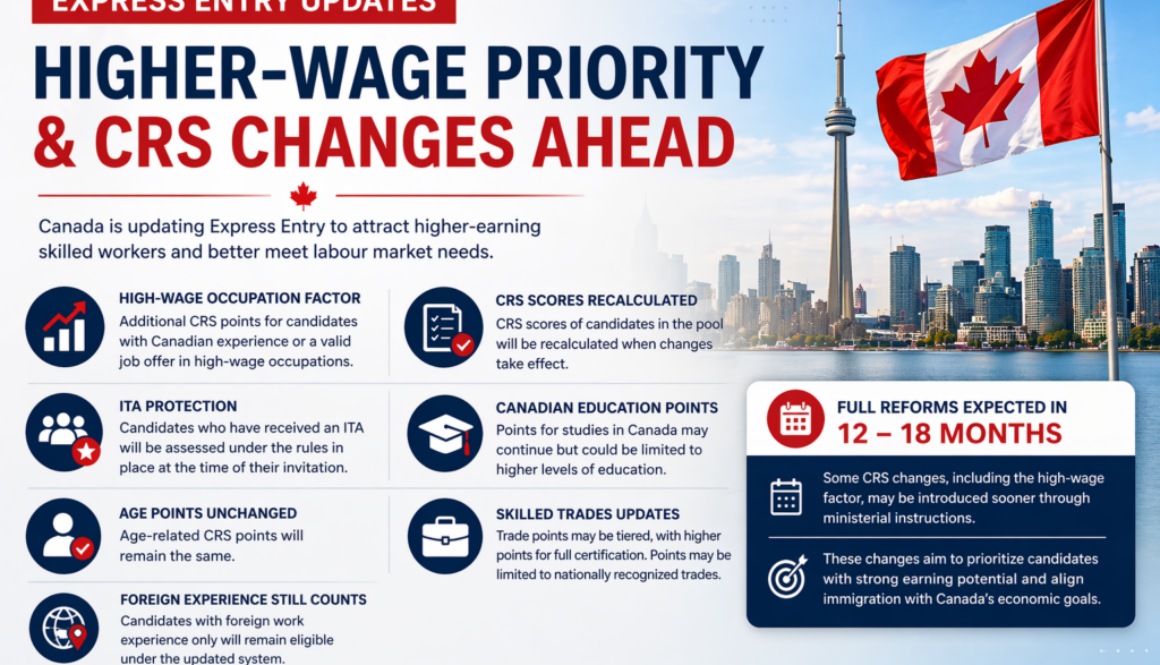
The Canadian government, led by Mark Carney, has unveiled plans to overhaul the nation’s immigration system to tackle economic challenges and public concerns. The reforms aim to balance economic growth, labor market needs, and social cohesion while preserving Canada’s reputation as a welcoming destination for newcomers. #CanadaImmigration #ImmigrationReform
Key changes include a more selective immigration process, prioritizing skilled workers in high-demand sectors like technology, healthcare, and green energy. The government will refine the points-based system to align with labor market needs, ensuring immigrants boost economic productivity. Enhanced integration programs will also support newcomers’ success in Canada. #SkilledWorkers #EconomicGrowth
To tackle the application backlog, the government will invest in digital tools and increase processing capacity. Stricter oversight of temporary worker programs will prevent exploitation and ensure fair wages for both immigrants and Canadian workers. #ImmigrationBacklog #FairWages
Public concerns over housing shortages and strained public services, which have fueled skepticism about high immigration levels, are driving these reforms. The government plans to temporarily cap certain immigration streams while focusing on long-term sustainability. #HousingCrisis #SustainableImmigration
These changes align with Carney’s economic vision to enhance Canada’s global competitiveness while addressing domestic pressures. The government will consult provinces, businesses, and community groups to finalize the reforms, with implementation set for next year. #MarkCarney #CanadaEconomy
Canada Expands Express Entry Healthcare and Social Services Category for 2025
Canada’s immigration system is evolving to meet the nation’s growing demand for healthcare and social service professionals. On February 27, 2025, Immigration, Refugees and Citizenship Canada (IRCC) announced significant updates to the Express Entry system, including an expansion of the Healthcare and Social Services category. This change, effective as of early 2025, opens new pathways to permanent residence (PR) for professionals such as pharmacists, social workers, and dental hygienists through category-based draws.
What’s New in the Healthcare and Social Services Category?
The updated category now includes a broader range of occupations, reflecting Canada’s need for both medical and social support professionals. Previously focused primarily on healthcare roles, the category has been augmented to incorporate social service occupations, aligning with the country’s labor market priorities. Notable additions include:
Pharmacists: Professionals dispensing medications and providing health advice.
Social Workers: Individuals supporting community welfare and mental health.
Dental Hygienists: Specialists in oral health care.
These changes were introduced to address critical shortages in Canada’s healthcare and social services sectors, driven by an aging population and increasing demand for community support. The full list of eligible occupations is classified under Canada’s National Occupation Classification (NOC) system, which candidates can check to confirm their eligibility.
How Does This Benefit Applicants?
The expansion of the Healthcare and Social Services category enhances opportunities for foreign nationals seeking Canadian PR through Express Entry. Category-based draws, introduced in 2023, target specific in-demand occupations, often requiring lower Comprehensive Ranking System (CRS) scores than general draws. For instance, in 2024, the CRS cut-off for healthcare occupations ranged between 422 and 463, significantly lower than the 524–549 range for general draws. This trend is expected to continue into 2025, giving applicants in these fields a competitive edge.
By focusing on category-based selection, IRCC aims to invite candidates who can fill key labor gaps more efficiently. Eligible candidates must still meet the minimum requirements for one of Express Entry’s three federal programs: the Federal Skilled Worker Program (FSWP), the Federal Skilled Trades Program (FSTP), or the Canadian Experience Class (CEC). Once in the Express Entry pool, they are ranked using the CRS based on factors like age, education, work experience, and language proficiency.
Are You Eligible?
To qualify for the updated Healthcare and Social Services category, candidates need at least six months of full-time, continuous work experience (or equivalent part-time experience) within the past three years in an eligible occupation. Here’s how to check your eligibility:
Identify Your NOC Code: Visit the Government of Canada’s NOC website and search for your job title to find the corresponding code.
Confirm Duties: Ensure your work experience aligns with the main duties listed under the NOC code.
Check the Category: Visit IRCC’s Express Entry category-based selection page and select “Healthcare and Social Service Occupations” to see if your NOC code is listed.
If your occupation matches, you could be eligible for a category-based draw, increasing your chances of receiving an Invitation to Apply (ITA) for PR.
Why This Matters
Canada’s decision to broaden this category underscores its commitment to building a robust workforce to support an aging population and evolving social needs. With pharmacists now able to address medication access, social workers tackling community challenges, and dental hygienists improving public health, these professionals are vital to the country’s future.
For applicants, this update means more opportunities to achieve Canadian PR with a lower CRS score threshold. As Express Entry continues to evolve—shifting focus toward in-Canada candidates and priority sectors like healthcare, education, and trades—the system is becoming a more targeted tool for economic immigration.
Looking Ahead
As of April 7, 2025, IRCC has already begun implementing these changes, with category-based draws expected to play a prominent role throughout the year. Candidates interested in pursuing this pathway should ensure their Express Entry profiles are up-to-date and reflect their relevant work experience.
Take the Next Step with Method Immigration
Ready to explore your options under the updated Express Entry Healthcare and Social Services category? At Method Immigration, owned by Laura Dickeson, we specialize in helping professionals like you navigate Canada’s immigration system. Contact us today for a personalized consultation and let us guide you toward your Canadian dream. Visit www.method-immigration.com or call 604-618-4156 to get started—your future in Canada awaits!
Canada’s Home Care Worker Immigration Pilots Now Open!
-
2,750 applications through the HCWP: Child Care Pilot
-
2,750 applications through the HCWP: Home Support Pilot
-
Prepare Your Documents
Ensure all required documents are ready before starting your application. If the cap is reached before you submit, you won’t be able to apply this year. Missing or incomplete documents could delay or jeopardize your application. -
Access the IRCC Permanent Residence Portal
Applications must be submitted online via the IRCC PR Portal. Create an account or sign in. If you can’t apply online, contact IRCC to request an alternative format (e.g., paper, braille, or large print). -
Select the Right Category
In the portal, choose “Economic” as your program type, then select the appropriate pilot and subcategory:-
For Applicants with Valid Work Authorization in Canada:
-
HCWP: Child Care – Workers in Canada
-
HCWP: Home Support – Workers in Canada
-
-
For Out-of-Status or Unauthorized Workers:
-
HCWP: Child Care – Workers in Canada – Public Policy
-
HCWP: Home Support – Workers in Canada – Public Policy
Double-check your selection—choosing the wrong category may result in your application being returned.
-
-
-
Upload Documents and Complete Forms
Upload your supporting documents (e.g., job offer, proof of training, work authorization) using IRCC’s document checklists. You’ll also need to fill out these forms directly in the portal:-
Generic Application Form for Canada (IMM 0008)
-
Schedule A: Background/Declaration (IMM 5669)
-
Supplementary Information: Your Travels (IMM 5562)
-
Additional Family Information (IMM 5406)
If a section doesn’t apply, write “Not Applicable” or “NA.” Missing signatures or incomplete forms will lead to rejection.
Missing a Document? Provide a written explanation and supporting evidence, uploaded under the relevant document type. -
-
Pay the Fees
The total cost starts at $1,525, covering:-
Processing fee
-
Right of Permanent Residence fee
-
Biometrics fee
Save a PDF of your payment receipt and upload it to the portal. IRCC will also email you a copy.
-
-
Submit Your Application
Before hitting submit, confirm:-
All forms are complete and signed
-
Fees are paid and the receipt is uploaded
-
All required documents are included
Incomplete applications will be returned, but you can resubmit (with the same receipt) if the cap hasn’t been reached.
-
-
Update your application details as needed
-
Complete biometrics
-
Schedule a medical exam
-
Monitor your application status regularly