Express Entry
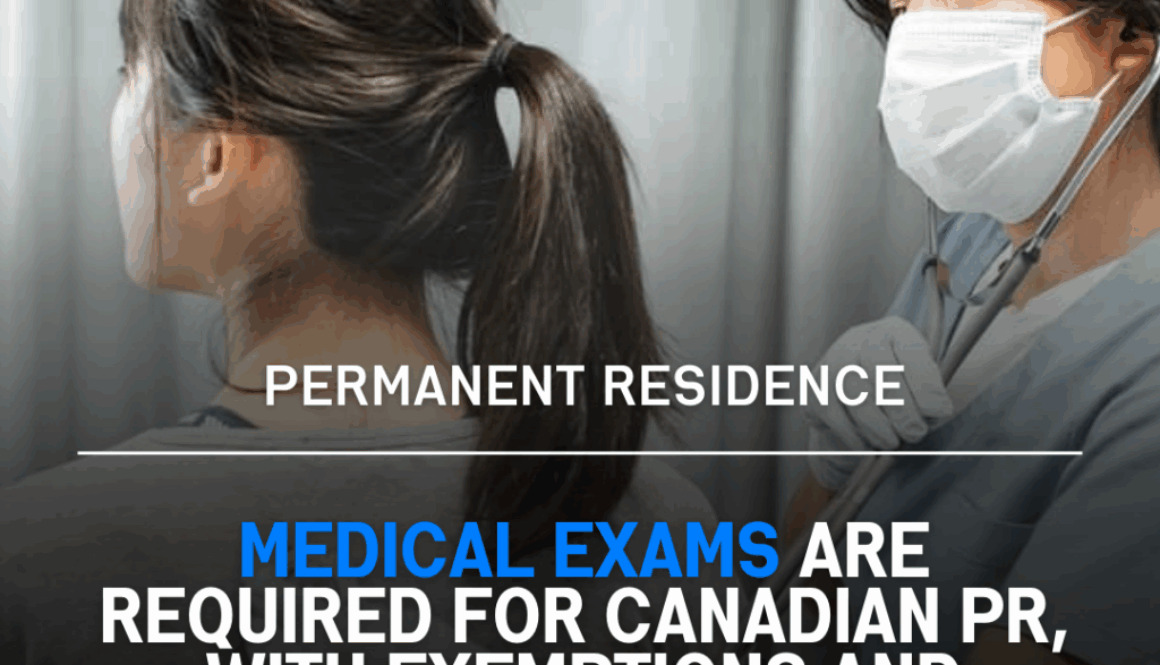
Medical Examination Requirements for Permanent Residence Applicants in Canada
If you’re applying for permanent residence in Canada, understanding the medical examination requirements is crucial. Here’s a concise guide based on the latest information from the Government of Canada.
In-Canada Applicants
The temporary public policy for immigration medical exams (IMEs) has been extended until October 5, 2029. If you’ve completed an IME within the last 5 years, include your IME number (or unique medical identifier) in your application. You may be exempt from a new IME if:
- You’re applying for permanent or temporary residence.
- You live in Canada.
- Your previous IME (within 5 years) showed low or no risk to public health/safety.
Note: All permanent residence applicants, including family members (even if not accompanying), must undergo an IME.
Types of Medical Exams
There are two types of IMEs:
- Standard Medical Exam: Comprehensive health assessment.
- Streamlined Medical Exam: Simplified exam used in urgent situations (e.g., humanitarian crises), as determined by Immigration, Refugees and Citizenship Canada (IRCC). You cannot choose the exam type; IRCC will specify.
Who Can Perform the Exam
Only panel physicians listed by IRCC can conduct IMEs. Your personal doctor is not eligible. IRCC makes the final decision on your exam results. If issues arise, you’ll be contacted in writing.
Find a panel physician.
When to Get Your Medical Exam
- Express Entry Applicants: As of August 21, 2025, you must complete an upfront medical exam before submitting your application. Contact a panel physician directly.
- Other Applications: Wait for IRCC instructions after submitting your application. You must complete the exam within 30 days of receiving instructions. This applies to sponsored spouses, partners, or children.
- Refugee Claimants at Port of Entry: A border services officer will instruct you to get an exam within 30 days.
Failure to follow instructions may result in application refusal.
What to Bring to Your Appointment
- Identification: Preferably a passport, but other accepted IDs include a national ID card, driver’s license (from Australia, Canada, New Zealand, UK, or US), birth certificate (for minors), or specific travel/refugee documents.
- Glasses or contact lenses, if applicable.
- Medical reports or test results for existing conditions.
- List of current medications.
- Medical Report form (IMM 1017E or IMM 1020E), provided by IRCC for non-upfront exams.
- 4 recent photographs, if the physician doesn’t use eMedical (confirm with the physician).
Vaccination Records: Bring proof of vaccinations (e.g., diphtheria, tetanus, COVID-19). The panel physician may record and share this with IRCC if you consent. Vaccination is voluntary and not required.
Costs
You’re responsible for all exam-related fees, including:
- Doctor or radiologist fees.
- Special tests or treatments.
- Specialist visits, if required.
- Optional vaccines (depending on the physician’s fees).
Refugees and asylum seekers may be exempt from certain fees. If your application is refused, fees are non-refundable.
If You Can’t Complete the Exam
If you face exceptional circumstances or lack access to a panel physician, submit a letter of explanation to IRCC for review. Contact IRCC for guidance.
What to Expect During the Exam
Standard Medical Exam
- Identification: The clinic will verify your identity and take your photo.
- Medical History: The physician will complete a questionnaire about your health and medications.
- Physical Exam: Includes weight, height, vision, hearing, heart, lungs, abdomen, limbs, and skin checks. Genital or rectal exams are not required. Breast exams, if needed, will be explained.
- Other Tests: Depending on age, you may need chest X-rays or lab tests. Abnormal results may lead to specialist referrals.
- Vaccinations: Optional vaccines may be offered. Bring proof of prior vaccinations if available.
Streamlined Medical Exam
- Similar to the standard exam but simplified, with a focus on medical history and select tests (e.g., X-rays or lab tests, based on age).
- Follow the same identification and chaperone protocols.
Chaperone Rights: You can request a staff member to be present, stop the exam to ask questions, or request a chaperone at any time.
After the Exam
- The physician sends results to IRCC and provides you with a document confirming the exam. Keep this for your records.
- If dissatisfied with the physician or radiologist, submit feedback via IRCC’s feedback form.
- Request a copy of your results from the physician during the visit (reports and X-rays are IRCC property and won’t be returned).
Including Results with Your Application
- Upfront Medical Exam: Follow IRCC instructions to include results.
- Streamlined or Post-Application Exam: No action needed; results are sent directly to IRCC.
Validity of Results
Medical exam results are valid for 12 months. If you don’t become a permanent resident within this period, you may need another exam.
For more details, visit the Government of Canada’s official page.
Page last modified: August 15, 2025
Celebrating Canada Day 2025: A Journey to Call Canada Home
The Simplest Careers to Launch Your Canadian Immigration Journey with Method Immigration
-
Healthcare Occupations
-
Nurse Aides and Orderlies (NOC 33102): Assist nurses and patients with basic care. Short certification programs (a few months) make this role accessible, with high demand due to Canada’s aging population.
-
Personal Support Workers (NOC 44101): Provide care in homes or care facilities. Training is quick, and jobs are abundant across provinces.
-
-
STEM Occupations
-
Mechanical Engineers (NOC 21301)
-
Insurance Brokers (NOC 63100)
-
-
Trades Occupations
-
Plumbers (NOC 72300): These jobs need little formal education, with on-the-job training common, making them ideal for entering skilled trades.
-
Carpenters (NOC 72310): With apprenticeship programs, carpentry offers a clear path and strong demand in construction.
-
-
Agriculture Occupations
-
Butchers (NOC 63201)
-
-
French Language Proficiency
-
Strong French skills (CLB 7 or higher) qualify you for draws regardless of occupation. Method Immigration can connect you with French-language training to boost your CRS score.
-
-
Meet Express Entry requirements (e.g., Federal Skilled Worker Program, Canadian Experience Class).
-
Have at least six months of full-time work experience in a targeted occupation (gained in Canada or abroad).
-
For French proficiency, achieve CLB 7 or higher in all language abilities.
-
Tailored Career Guidance: We’ll recommend training programs or certifications to enter high-demand occupations quickly.
-
Work Experience Planning: We’ll help you secure roles like nurse aides or farm workers to meet the six-month experience requirement.
-
Language Support: We connect you with resources to improve your English or French scores, unlocking French proficiency draws.
-
Personalized Strategy: Our team provides one-on-one support to maximize your CRS score and align with Canada’s labor needs.
Mark Carney’s Government Outlines Changes to Canada’s Immigration Policies
The Canadian government, led by Mark Carney, has unveiled plans to overhaul the nation’s immigration system to tackle economic challenges and public concerns. The reforms aim to balance economic growth, labor market needs, and social cohesion while preserving Canada’s reputation as a welcoming destination for newcomers. #CanadaImmigration #ImmigrationReform
Key changes include a more selective immigration process, prioritizing skilled workers in high-demand sectors like technology, healthcare, and green energy. The government will refine the points-based system to align with labor market needs, ensuring immigrants boost economic productivity. Enhanced integration programs will also support newcomers’ success in Canada. #SkilledWorkers #EconomicGrowth
To tackle the application backlog, the government will invest in digital tools and increase processing capacity. Stricter oversight of temporary worker programs will prevent exploitation and ensure fair wages for both immigrants and Canadian workers. #ImmigrationBacklog #FairWages
Public concerns over housing shortages and strained public services, which have fueled skepticism about high immigration levels, are driving these reforms. The government plans to temporarily cap certain immigration streams while focusing on long-term sustainability. #HousingCrisis #SustainableImmigration
These changes align with Carney’s economic vision to enhance Canada’s global competitiveness while addressing domestic pressures. The government will consult provinces, businesses, and community groups to finalize the reforms, with implementation set for next year. #MarkCarney #CanadaEconomy
Canada Updates Express Entry Categories for 2025: New Opportunities and Shifts in Focus
- Healthcare: Expanded to include social services roles, broadening opportunities beyond traditional medical professions.
- Trades: New NOC codes have been added, though four occupations have been dropped from the list, narrowing its scope.
- STEM: Science, tech, engineering, and math professionals still have a seat at the table, but IT occupations have been notably excluded from targeted draws this year—a surprising pivot.
- Transport: Completely removed from category-based draws, marking a significant shift in priorities.
- Agriculture and Agri-Food: Slimmed down to just one NOC code, focusing efforts on a single critical role.
IRCC’s Latest CEC Draw
- Draw Date: February 5, 2025
- Program Targeted: Canadian Experience Class (CEC)
- Number of Invitations: 4,000
- Minimum CRS Score: 521
- Check Your Profile: If you’re in the Express Entry pool under the CEC, check your profile to see if you’ve received an ITA.
- Prepare Your Application: Those invited should prepare their application for permanent residency promptly, as there’s a 60-day window to submit all required documents.
- Stay Updated: The CRS score cut-off can vary with each draw, so maintaining an updated profile is crucial for future invitations.
RO Invitations: Method Immigration’s Expert Guide to Your Canadian Journey
Are you among the hopefuls eagerly awaiting an invitation from a Recognized Organization (RO) to kickstart your Canadian adventure? Maybe you’ve already received your RO invitation but are unsure about the next steps in the application process? Or perhaps, despite your qualifications, you’re still waiting for that pivotal invitation. Method Immigration is here to demystify the complexities of RO applications and help you navigate your path to Canada.
Deciphering RO Invitations:
ROs are crucial in Canada’s immigration landscape, especially for those aiming for the Provincial Nominee Program (PNP) or Express Entry. Receiving an RO invitation is a milestone on your way to Canada, but the application journey can be intricate, filled with detailed requirements, deadlines, and legal intricacies.
Assistance with Your RO Application:
Our expert consultants at Method Immigration are well-versed in the nuances of RO applications. We specialize in preparing and submitting applications that stand out, tailored to meet the specific demands of each province. From gathering the right documents to prepping for potential interviews, we guide you through every step, ensuring your application showcases your strongest attributes.
Not Received an RO Invitation? Explore Other Routes:
If you haven’t yet received an RO invitation, don’t despair. There are alternative immigration pathways. Method Immigration can help you explore options like work permits, study visas, family sponsorship, or other economic programs that might suit your profile and life goals better.
Why Method Immigration Stands Out:
– Expertise in RO Applications: Our team stays updated with the latest immigration policies, focusing on RO processes.
– Personalized Strategy: We offer bespoke consultations, ensuring your application strategy is tailored to your unique situation.
– Proven Track Record: We’ve successfully helped countless clients navigate through RO invitations and alternative immigration routes.
Get in Touch:
Don’t let the complexity of RO applications or the absence of an invitation halt your Canadian dream. Whether you need assistance with your RO application or to explore other immigration options, Method Immigration is ready to assist. Contact us for personalized guidance towards achieving your Canadian ambitions.
For consultations, inquiries, or to book an appointment, reach out to Method Immigration at [insert contact details]. Let us help you turn your Canadian dream into a reality.
About Method Immigration:
Method Immigration is a leading consultancy known for its expertise in RO applications and other Canadian immigration pathways, offering personalized, stress-free services to those aspiring to make Canada their home.
New Canadian Immigration Pathways
- Four New Immigration Pathways: Canada is set to introduce four innovative immigration pathways in 2025 aimed at diverse groups including rural workers, tech innovators, and caregivers. These programs are designed to match Canada’s labor needs with your skills. Whether you’re looking to work in the vast, beautiful Canadian countryside or in bustling tech hubs, there’s a path for you!
- Express Entry Evolution: Significant reforms to Canada’s Express Entry system are on the horizon, with a focus on eliminating fraud by removing LMIA points. This change aims to level the playing field, ensuring your hard work and qualifications are the true keys to your Canadian journey.
- Pre-Arrival Services: Are you gearing up for your move in 2025? Pre-arrival services are now more comprehensive than ever, providing you with crucial information on settling, working, and integrating into Canadian society. From understanding the cultural landscape to navigating your professional recognition, we’re here to guide you every step of the way.
- Action Time: With Canada planning to reduce immigration levels, now is not the time to delay. Act swiftly to secure your future in one of the world’s most welcoming countries. Our team at Method Immigration specializes in navigating these new pathways, ensuring your application is robust, timely, and aligned with the latest policy shifts.
- Phone: 604-618-4156
- Email: admin@method-immigration.com
- Website: Visit our site for more details method-immigration.com
Flagpoling Policy Change
Flagpoling Set to End as IRCC Strengthens Border Security
The Government of Canada has announced a major policy change that will put an end to the practice of flagpoling, a popular method for temporary residents to expedite immigration services at border crossings. Immigration Minister Marc Miller revealed the plan on December 17, 2024, stating that the move is part of broader efforts to enhance the integrity and efficiency of Canada’s immigration system.
What is Flagpoling?
Flagpoling is a process where temporary residents in Canada leave the country and re-enter through a Canadian port of entry, often at the U.S. border, to receive immediate immigration services. This practice has been commonly used by individuals seeking to renew work permits, study permits, or finalize their permanent residency status.
While flagpoling provides faster processing compared to online applications, it places additional strain on border officials and creates congestion at border crossings.
Why is Flagpoling Ending?
Minister Miller emphasized that ending flagpoling will help border officials focus on their primary responsibilities, such as ensuring border security and managing legitimate cross-border travel and trade. “Flagpoling will no longer be an option,” he stated, adding that the policy will be implemented “as soon as possible.”
This decision aligns with IRCC’s ongoing efforts to improve the immigration system by reducing backlogs and streamlining application processes. Earlier in 2024, measures were introduced to limit flagpoling, including reduced service hours at 12 Canada-U.S. border crossings and restrictions for specific applicant groups, such as Post-Graduation Work Permit (PGWP) holders.
What Does This Mean for Temporary Residents?
Once the policy takes effect, temporary residents will no longer be able to rely on flagpoling for expedited services. Instead, they will need to apply online to extend their stay or modify their immigration status. This shift underscores the importance of planning and understanding the online application process to avoid delays or lapses in legal status.
Key Takeaways
Effective Date: The exact date for the policy’s implementation has not yet been announced, but IRCC plans to enforce it in the near future.
Application Process: Temporary residents should familiarize themselves with IRCC’s online application system and prepare for potential processing delays.
Border Efficiency: The change aims to reduce congestion and improve operational efficiency at Canada’s borders.
What’s Next?
As the policy unfolds, IRCC will likely release further details and guidance for temporary residents and other stakeholders. In the meantime, those affected are encouraged to monitor official updates and ensure their applications are submitted well in advance of expiry dates.
At Method Immigration, we are committed to keeping you informed about important changes to Canadian immigration policies. If you have questions or need assistance with your application, contact us today to speak with one of our experienced RCIC consultants.